Petra Vogel · 15 September 2026
Valley Farmers Channel Early Harvests Into Artist Residencies Exploring Historic Trade Routes
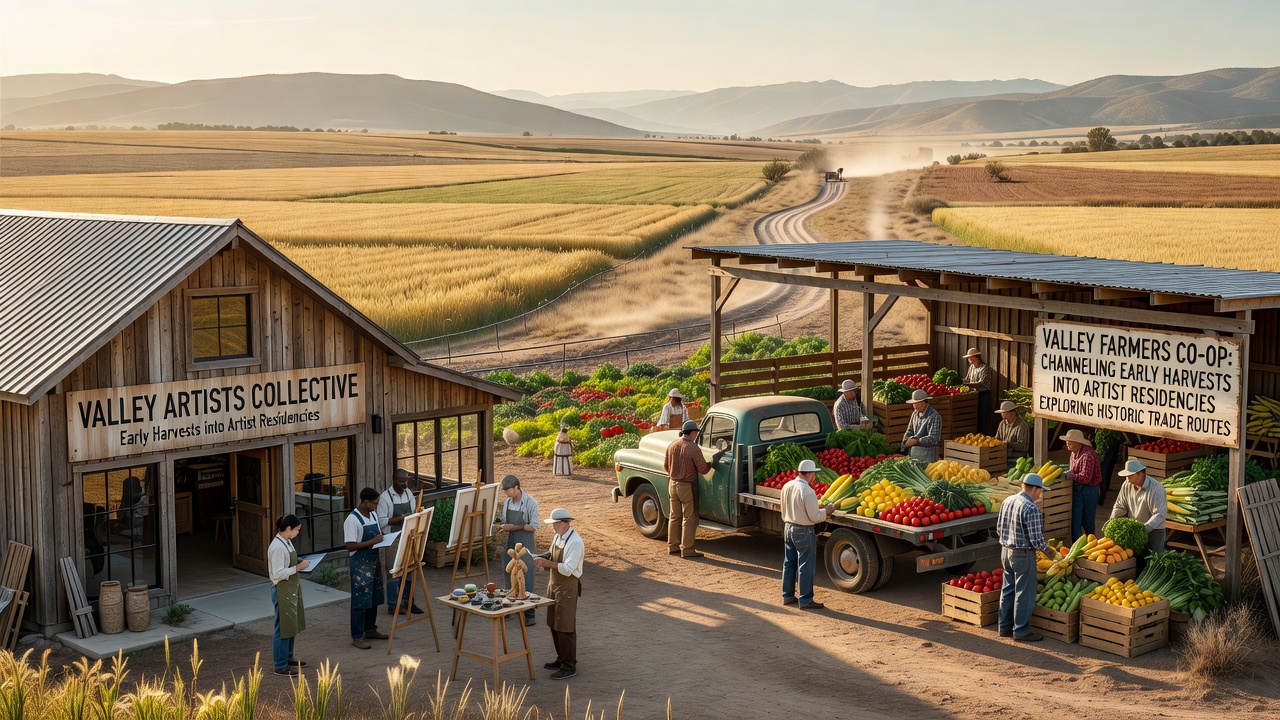
Valley agricultural communities have begun directing portions of their early season yields toward artist residency programs that trace and reinterpret ancient trade corridors. These initiatives connect local produce distribution with cultural exploration, creating structured exchanges where harvested goods support visiting creators who document and respond to historic pathways. Data from regional agricultural reports indicate that such programs emerged from coordinated efforts between farming cooperatives and cultural organizations starting in 2024.
Program Structure and Operations
Farmers identify surplus early harvests of grains, fruits, and vegetables each spring, then allocate these resources to sustain residencies lasting four to eight weeks. Participants receive housing, studio access, and direct supplies of fresh goods in exchange for producing works that examine trade route histories through drawings, installations, and multimedia projects. Observers note that this model reduces food waste while providing artists with material connections to the landscapes they study.
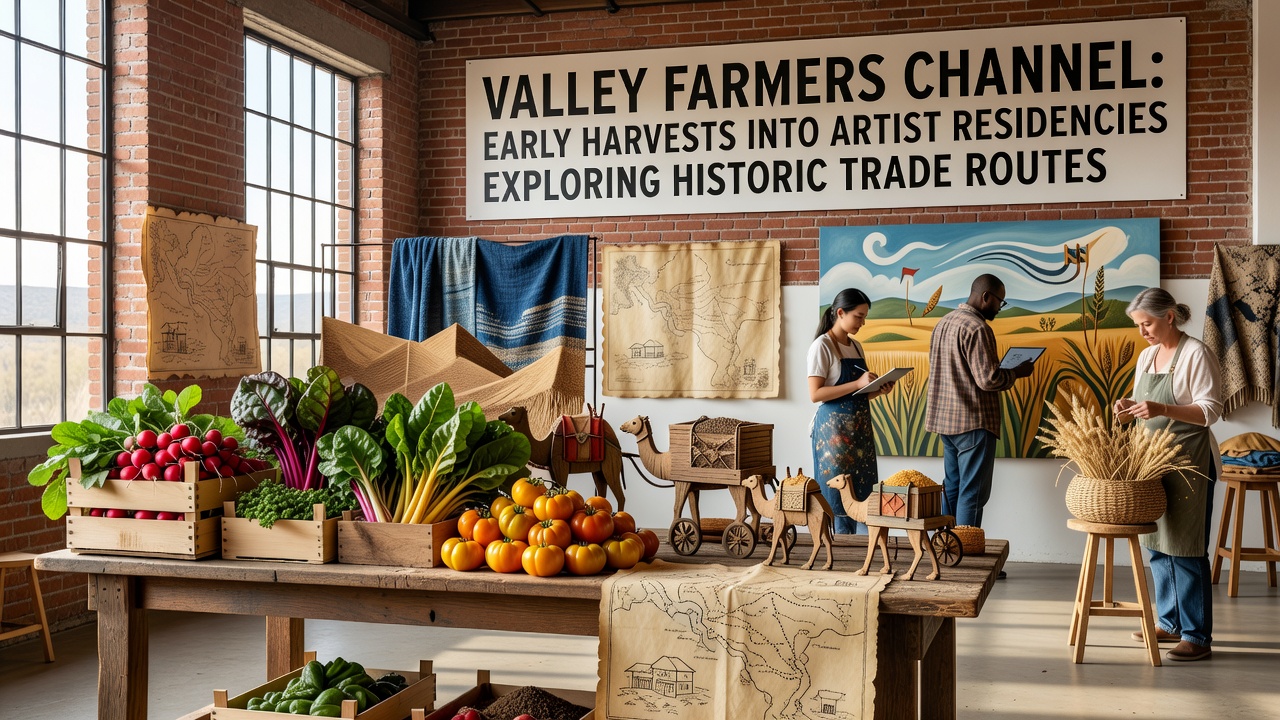
Coordinators match selected artists with specific route segments based on proposals submitted to oversight committees. One residency in the northern valley segment focused on 19th-century merchant trails, resulting in a series of maps and journals now archived at local heritage centers. Similar placements along southern corridors have generated textile works incorporating patterns derived from caravan records preserved in regional museums.
Historic Trade Routes Under Examination
The routes in question include segments of overland paths that once linked inland valleys to coastal ports and cross-border markets. Researchers from institutions such as the Council of Europe have documented how these corridors facilitated exchanges of agricultural products, textiles, and ideas centuries ago. Current programs adapt that legacy by using contemporary harvests to fund artistic inquiries into the same geographic lines.
Participants often travel segments on foot or by bicycle, gathering observations that inform their output. In one documented case, an artist collective produced audio recordings of ambient sounds along a preserved trail, later paired with harvest-based sculptures for public exhibition. These activities occur under permits issued by land management agencies, ensuring minimal impact on active farmland and protected sites.
September 2026 Developments
Planning documents released by valley agricultural boards outline expanded residency slots scheduled for September 2026. That period aligns with second-wave harvests of late summer crops, allowing greater volume for participant support. Organizers project involvement from at least twelve additional farms, each contributing measured allotments tracked through shared logistics software.
Applications for the 2026 cycle opened in early 2025, with selection criteria emphasizing projects that integrate agricultural data with route cartography. Figures from similar past cycles show average residency outputs include three to five public events per participant, ranging from guided walks to gallery displays. Partnerships with academic departments at universities in multiple countries provide advisory input on historical accuracy and material sourcing.
Resource Allocation and Tracking
Harvest contributions undergo weighing and categorization before distribution, with records maintained by cooperative treasurers. Produce reaches artists through weekly deliveries coordinated with local transport networks, minimizing spoilage. Studies conducted by agricultural extension services in comparable regions show this approach can divert up to 15 percent of early yield into non-commercial channels while maintaining overall farm revenue stability.
External evaluations from bodies such as the Australian Department of Agriculture, Fisheries and Forestry have reviewed analogous programs for scalability. Their reports highlight how direct produce linkages create tangible ties between land use and cultural output, distinct from cash-grant models. Valley participants maintain similar logs to support ongoing assessments.
Conclusion
These combined efforts illustrate measurable intersections between agricultural timing and cultural programming along established historic corridors. Continued data collection through 2026 will clarify long-term patterns in participation rates and output volumes. Regional authorities continue to monitor compliance with land-use regulations as the model develops.