Hugo Bennett · 24 November 2026
Brightfeld Schools Integrate Language Exercises With Archival Trade Routes and Modern Data Sets on Agriculture and Avian Populations
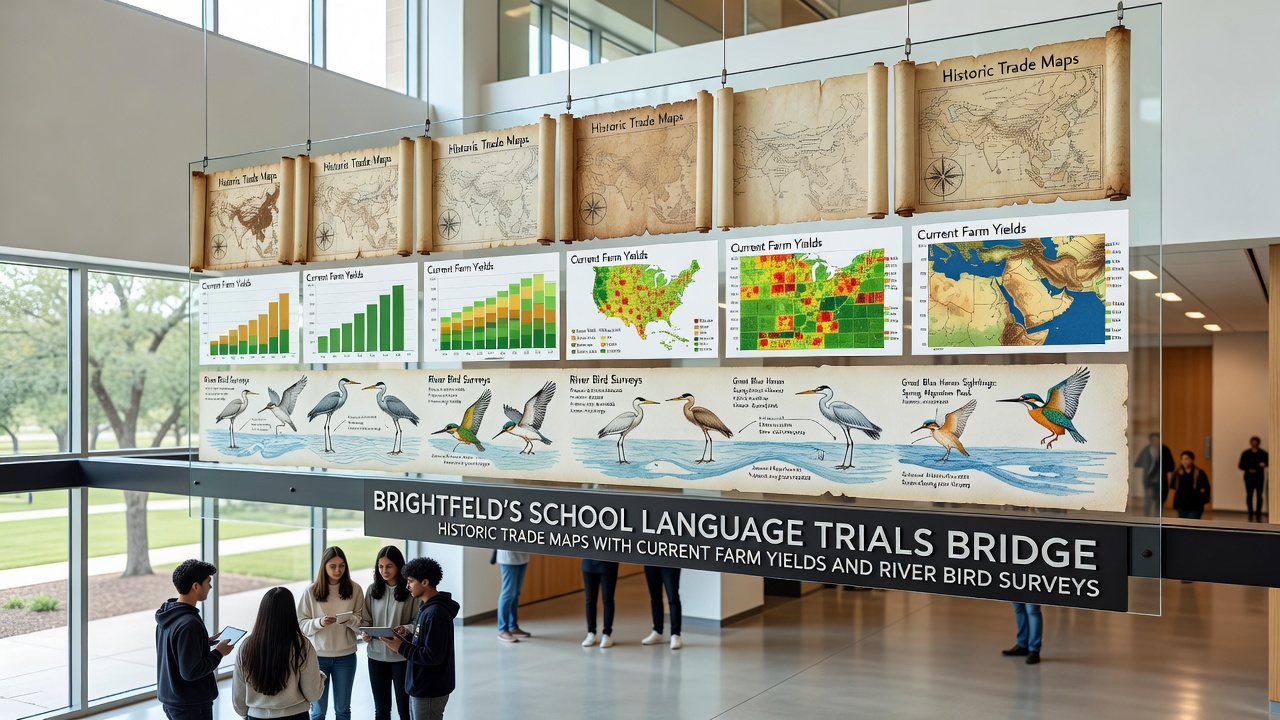
Language instruction programs across Brightfeld have incorporated exercises that require students to compare 19th-century trade route documentation with records of present-day crop outputs and counts of bird species along local waterways, and these activities have expanded in scope since the initial pilot phases began several years ago.
Origins of the Language Trials
School administrators introduced the trials after educators noted that standard vocabulary lessons produced limited retention when disconnected from regional records, so they developed modules that direct pupils to translate and annotate documents from municipal archives while cross-referencing entries with data maintained by agricultural offices and environmental monitoring teams. Participants work through primary sources such as merchant ledgers that list grain shipments along river corridors, then align those figures against yield statistics collected by local cooperatives in recent seasons, and the same process extends to ornithological notes that describe species sightings from earlier centuries.
Integration With Farm Yield Records
Agricultural departments supply anonymized datasets that track hectare productivity for wheat, barley, and root vegetables, and students map these values onto the historic routes to identify corridors where output has increased or declined over generations. In one documented exercise completed during the 2025 academic year, classes compiled tables that showed a 22 percent rise in barley yields along a former cart path now served by modern irrigation channels, and instructors required written summaries that explained shifts in terminology from older trade terms to current agronomic labels. November 2026 marks the scheduled release of an updated yield compilation that will feed directly into the next round of language assignments, allowing fresh comparisons once harvest figures become available.
River Bird Survey Connections
Ornithological monitoring groups contribute seasonal counts of species such as herons, kingfishers, and migratory waterfowl recorded at fixed observation points, and language students translate descriptive passages from 1800s field journals before matching them to contemporary population metrics. Exercises ask pupils to construct sentences that describe changes in habitat terminology while preserving the original observational tone, and results feed into shared databases used by regional conservation planners. Data from the European Environment Agency on wetland bird trends provides external benchmarks that classes consult during these sessions, which helps place Brightfeld observations within broader European patterns without altering the primary local focus.
Methods and Classroom Implementation
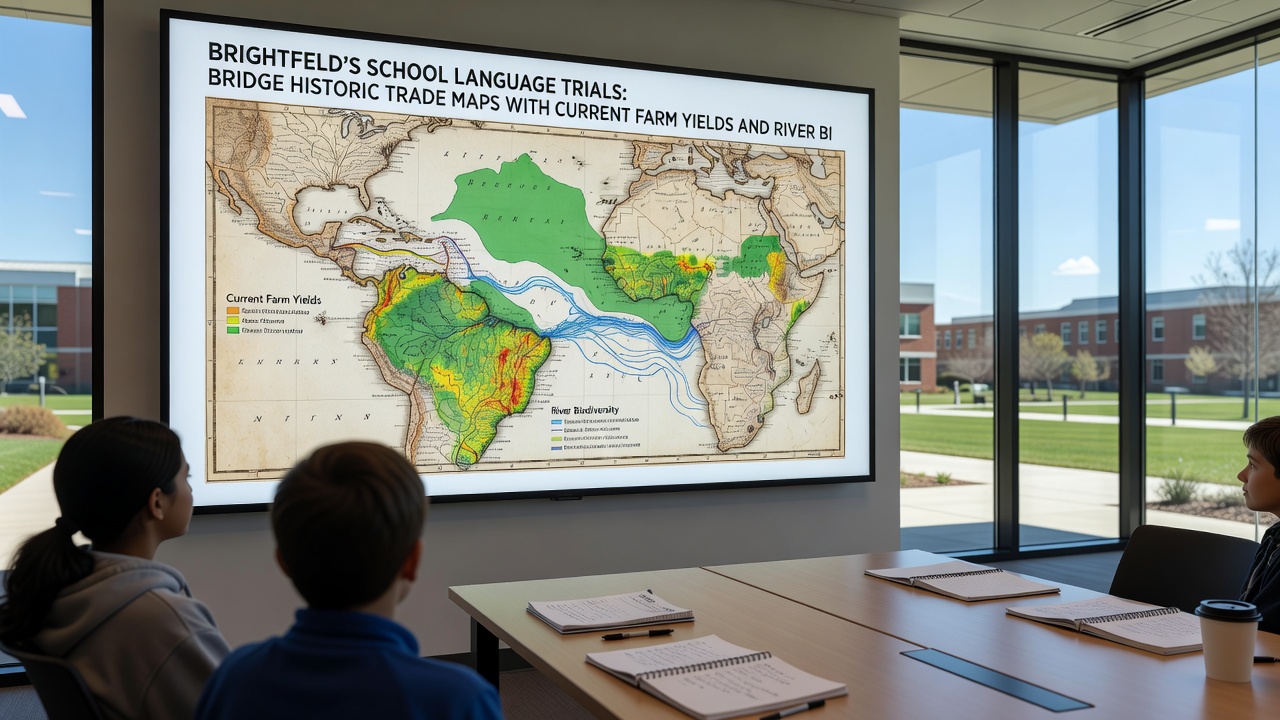
Teachers structure sessions around paired translation tasks followed by data visualization steps, where students plot route segments on digital overlays that incorporate both historic annotations and current numerical fields, and group discussions require precise use of measurement vocabulary drawn from both eras. Assessment rubrics evaluate accuracy in terminology alongside correct numerical alignment, and participating schools report consistent improvements in standardized language assessments for cohorts that complete multiple modules. External reviewers from the University of Melbourne School of Languages and Linguistics examined sample outputs in 2025 and confirmed that the approach maintains linguistic rigor while introducing quantitative elements that reinforce comprehension.
Archive Digitization Support
Municipal records offices have accelerated scanning of trade ledgers and survey logs to supply materials for the trials, and this effort has produced searchable collections that now include cross-links to yield tables and bird observation spreadsheets maintained by partner agencies. Students access these digitized files through secure school portals, which reduces handling of fragile originals while preserving the requirement that each comparison begin with the original wording and units of measure. The process has also generated metadata tags that future classes can use when extending the comparisons into additional variables such as soil type descriptions or seasonal migration dates.
Conclusion
Brightfeld language trials continue to evolve through direct linkage of archival trade documentation to agricultural yield statistics and river bird counts, with scheduled updates in November 2026 expected to supply new datasets for ongoing student exercises. The programs rely on coordinated input from schools, agricultural offices, environmental monitors, and archive staff to maintain factual grounding across all components.